
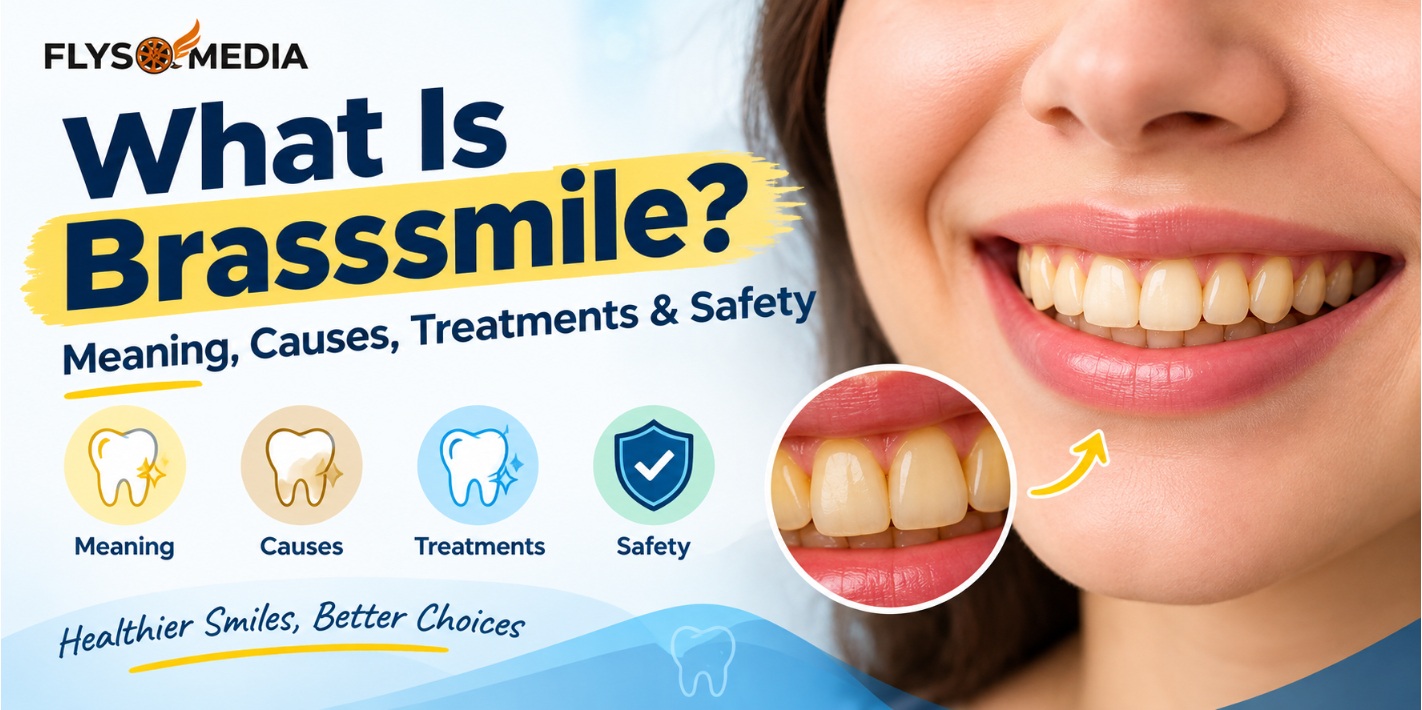
The term Brasssmile can be confusing because it is used online in different ways. In some discussions, it describes teeth that have a warm, yellow, golden, or slightly dull appearance. In other cases, the name may be connected with websites, digital smile tools, or general informational platforms.
- What Does Brasssmile Mean?
- Why Is Brasssmile Confusing Online?
- Understanding Natural Tooth Color
- Surface Stains and a Brasssmile Appearance
- Enamel Thinning and Yellow Dentin
- What Is Intrinsic Tooth Discoloration?
- Is Brasssmile a Dental Disease?
- Brasssmile Websites and Similar Domains
- How to Judge the Quality of Brasssmile Information
- AI Smile Analysis and Brasssmile
- Digital Technology in Modern Dentistry
- Can Teeth Whitening Improve a Brasssmile Appearance?
- Cosmetic Treatments for Discolored Teeth
- Brasssmile in Children and Teenagers
- Daily Habits for a Healthier Smile
- Is Brasssmile Safe to Browse Online?
- Where to Find Reliable Dental Information
- Choosing the Right Approach for a Brasssmile Concern
- Final Thoughts
- FAQs About Brasssmile
From a dental perspective, Brasssmile is not normally used as the name of a specific disease or recognized clinical condition. Dentists are more likely to use terms such as tooth discoloration, extrinsic staining, intrinsic discoloration, enamel erosion, or dentin exposure.
Understanding this difference is important. A yellowish smile can have many causes, and the right solution depends on what is actually changing the appearance of the teeth.
What Does Brasssmile Mean?
Brasssmile is generally an informal online expression for teeth that look warm, yellowish, golden, cream-colored, or somewhat dull. It should not be confused with a formal dental diagnosis.
Natural teeth are rarely bright white. Their color is influenced by the thickness and transparency of enamel, the underlying dentin, genetics, age, diet, oral hygiene, and previous dental treatment. Lighting can also make teeth look lighter or darker in photographs.
This means that a warm-looking smile is not automatically unhealthy. One person may have surface stains from coffee or tea, while another may naturally have more visible yellow dentin beneath relatively thin enamel.
Because the causes are different, there is no single treatment that can be called a “Brasssmile treatment.”
Why Is Brasssmile Confusing Online?
The word “smile” naturally makes people think of dentistry. As a result, someone searching for Brasssmile may assume that it is the name of a dental clinic, cosmetic dentistry service, whitening product, or digital smile platform.



However, similar names can be used by completely unrelated websites. Different domain extensions or slight spelling changes do not prove that two websites belong to the same company.
Before trusting a website, check its exact domain, ownership information, contact details, privacy policy, authorship, and the credentials of anyone providing health-related information.
This is especially important if a website asks for dental photographs, medical information, payment details, or other personal data.
Understanding Natural Tooth Color
To understand why teeth may look “brassy,” it helps to know how a tooth is structured.
The outer surface is called enamel. It is extremely hard but has some natural transparency. Beneath the enamel is dentin, which normally has a yellow or yellow-brown color.
Because enamel allows some light to pass through, the color of dentin contributes to the overall shade of a tooth. If enamel is thinner or more translucent, the warmer dentin underneath can become more noticeable.
This is one reason why healthy teeth can naturally look cream, ivory, or slightly yellow.
Tooth color also varies from person to person. Genetics, age, enamel thickness, and previous dental experiences all contribute to these differences.
For general background on the structure and function of teeth, readers can also consult Wikipedia’s overview of human teeth.
Surface Stains and a Brasssmile Appearance
One common reason teeth become darker or more yellow over time is extrinsic staining. This type of discoloration develops mainly on the outside of the teeth.
Common contributors include:
- Coffee and tea
- Red wine
- Tobacco
- Dark-colored berries
- Colored sauces and foods
- Plaque buildup
- Tartar or hardened dental deposits
Some surface stains can be reduced through professional dental cleaning. Depending on the person’s oral health and the type of discoloration, whitening may provide additional improvement.
Good daily oral care can also help control new staining. Brushing with fluoride toothpaste and cleaning between the teeth are important habits.
However, brushing harder does not mean brushing better. Excessive pressure can irritate the gums and contribute to tooth wear.
Enamel Thinning and Yellow Dentin
Not every yellow or warm tooth color comes from an external stain.
Because enamel is naturally translucent, thinning enamel can make the yellowish dentin underneath more visible. As a result, teeth may continue to look warm even after surface stains have been removed.
Several factors can contribute to enamel wear, including:
- Frequent exposure to acidic foods and drinks
- Tooth grinding
- Physical wear
- Natural aging
- Certain oral habits
This distinction is important when considering whitening. Whitening products can change the appearance of certain stains, but they cannot rebuild enamel that has already been lost.
If teeth have become unusually sensitive or show visible erosion, cracks, pain, or rapid changes in appearance, professional dental evaluation is more appropriate than repeatedly using whitening products.
What Is Intrinsic Tooth Discoloration?
Intrinsic discoloration develops within the tooth rather than simply sitting on its surface.
Possible causes include:
- Tooth trauma
- Changes during tooth development
- Certain medication exposures during tooth formation
- Excessive fluoride exposure during childhood
- Aging
- Internal changes within an individual tooth
Intrinsic discoloration can appear yellow, brown, gray, or another shade. It may also affect only one tooth.
For example, a tooth that has been injured can eventually become darker than the teeth surrounding it. A sudden change affecting one tooth deserves attention because the cause may be different from ordinary surface staining.
Some intrinsic discoloration can respond to dentist-supervised whitening, while other cases may need cosmetic or restorative treatment.
Is Brasssmile a Dental Disease?
Brasssmile itself should not be treated as a specific dental disease. The term generally describes an appearance rather than identifying one particular medical condition.
Healthy teeth can naturally have different shades, including ivory, cream, and yellow. Tooth color by itself does not provide a complete picture of oral health.
However, some conditions that change tooth color can require treatment. These may include decay, enamel erosion, dental trauma, gum disease, or changes inside a tooth.
Seek professional dental advice if discoloration occurs with symptoms such as:
- Toothache
- Swollen gums
- Persistent sensitivity
- Bleeding gums
- Cracks
- Rapid enamel wear
- Loose teeth
- A single tooth suddenly becoming darker
The priority should be finding the cause and maintaining healthy teeth before focusing only on cosmetic whitening.
Brasssmile Websites and Similar Domains
People searching for Brasssmile may encounter websites with similar names but different purposes.
One website might provide dental information, another could promote digital smile technology, and another could simply publish general content. Similar branding does not establish that these websites have the same owner or professional connection.
Before relying on a Brasssmile-related website, look for:
- A clear About page
- Verifiable contact information
- Named authors
- Professional credentials
- References and sources
- Privacy information
- Editorial policies
- Information about content reviews or updates
If a website makes medical or dental claims, check whether qualified professionals are identified and whether their credentials can be independently confirmed.
How to Judge the Quality of Brasssmile Information
Good dental information should explain both what a treatment can do and what it cannot do.
When reading an article about Brasssmile, check whether it distinguishes between:
- Surface staining
- Intrinsic discoloration
- Natural dentin color
- Enamel changes
- Dental disease
- Cosmetic concerns
These distinctions matter because each situation can require a different approach.
Authorship is another useful trust signal. Medical content is easier to evaluate when the writer, reviewer, qualifications, references, and publication or update date are clearly provided.
It is also important to separate website security from medical credibility.
A website using HTTPS can encrypt information exchanged with your browser, but HTTPS does not prove that the site’s dental advice is correct. Professional-looking graphics, testimonials, and technical language also do not automatically establish medical authority.
AI Smile Analysis and Brasssmile
Some digital smile platforms use artificial intelligence or image-analysis technology to examine photographs.
These tools may identify visible features such as:
- Apparent tooth shade
- Tooth spacing
- Alignment
- Smile symmetry
- Gum visibility
- General smile proportions
Such technology can be useful for education, visualization, or preparing questions for a dental appointment.
However, a photograph cannot show everything happening inside a tooth or beneath the gums. An AI system cannot replace a complete clinical examination.
For example, photographs alone may not reveal cavities below certain surfaces, root problems, periodontal conditions, infections, or changes within the jawbone.
AI smile analysis should therefore be considered a supplementary tool rather than a diagnosis.
Digital Technology in Modern Dentistry
Dentistry now uses many digital technologies in addition to AI.
Digital X-rays can help dentists examine structures that cannot be seen through an ordinary photograph. Intraoral cameras provide close-up views of teeth and gums.
Intraoral scanners can create digital models of the mouth and may be used in treatments involving aligners, crowns, bridges, retainers, and other dental work.
For selected cases, cone-beam computed tomography (CBCT) can provide three-dimensional information. CAD/CAM systems can also assist with the design and production of dental restorations.
Digital smile design can help patients visualize possible cosmetic changes. Still, technology does not remove the need for proper diagnosis, treatment planning, professional skill, and long-term maintenance.
Can Teeth Whitening Improve a Brasssmile Appearance?
If Brasssmile refers to yellow or warm-looking teeth, whitening may be one possible cosmetic option.
Different whitening methods include:
- Whitening toothpaste
- Whitening strips
- Dentist-provided trays
- Professional in-office whitening
These methods do not produce identical results.
Whitening tends to work better on certain types of discoloration than others. Existing crowns, veneers, fillings, and bonding also generally do not whiten in the same way as natural teeth.
This can sometimes create uneven shades if whitening is performed without considering existing dental restorations.
Temporary sensitivity or gum irritation may also occur during whitening. Products should therefore be used according to their instructions.
Whitening cannot repair cavities, rebuild lost enamel, cure gum disease, or correct every type of internal discoloration.
Cosmetic Treatments for Discolored Teeth
When whitening is not suitable or does not provide the desired result, a dentist may discuss other cosmetic options.
Composite Bonding
Composite bonding uses tooth-colored resin to change the visible appearance of selected teeth. It can be relatively conservative, although the material can stain or wear over time.
Veneers
Veneers are thin restorations placed over the front surface of teeth. They can significantly change tooth color and shape, but treatment may involve permanent alteration of the natural tooth structure.
Crowns
Crowns cover a larger portion of a tooth and are generally considered when there is a restorative reason to use them, rather than simply for mild cosmetic discoloration.
The right option depends on the condition of the teeth, the amount of tooth preparation required, maintenance needs, cost, and long-term goals.
A mild color difference does not automatically justify an invasive cosmetic procedure.
Brasssmile in Children and Teenagers
Yellowish-looking teeth in children are not always a cause for concern.
When permanent teeth begin replacing baby teeth, the newer permanent teeth can appear noticeably more yellow. Permanent teeth contain more dentin and naturally have a different shade, which can make the contrast especially obvious.
Other possible causes of discoloration include:
- Plaque buildup
- Tooth decay
- Trauma
- Enamel defects
- Fluorosis
- Developmental changes
A single tooth that changes color after an injury deserves particular attention because trauma can affect the inside of the tooth.
Children should not automatically use adult whitening products simply because their teeth appear yellow. A dental professional can determine whether the color is normal or requires further evaluation.
Daily Habits for a Healthier Smile
Good oral care cannot change every natural tooth color, but it can reduce plaque, prevent disease, and help limit some external stains.
Helpful habits include:
- Brush twice a day with fluoride toothpaste.
- Clean between your teeth regularly.
- Attend routine dental examinations.
- Have professional cleaning when recommended.
- Limit frequent sugary foods and drinks.
- Reduce repeated exposure to acidic beverages.
- Drink or rinse with water after strongly colored drinks.
- Avoid smoking and tobacco products.
- Do not aggressively scrub teeth to remove stains.
Healthy enamel and gums are more important than achieving an artificially bright shade of white.
Is Brasssmile Safe to Browse Online?
When visiting a Brasssmile-related website, consider two separate issues: technical safety and information quality.
A website may use HTTPS and still publish inaccurate dental information. Likewise, a professional-looking design does not necessarily mean the publisher has dental expertise.
Be careful when a website requests:
- Dental photographs
- Medical history
- Phone numbers
- Email addresses
- Payment information
- Account passwords
- Other sensitive personal information
Before submitting information, understand who operates the platform, why the information is being collected, how it will be stored, and whether it may be shared.
Also check the exact spelling of the website address. Look-alike domains can lead users to completely different services.
Unexpected redirects, suspicious downloads, aggressive notification prompts, and unfamiliar payment pages are reasons to stop interacting with a website.
Where to Find Reliable Dental Information
When researching Brasssmile or tooth discoloration, compare online claims with information from established sources.
Useful sources include:
- Professional dental organizations
- Government health agencies
- Universities
- Peer-reviewed research
- Qualified dental professionals
Reliable health information should also explain uncertainty and limitations. Whitening, veneers, bonding, and other treatments do not produce identical results for every person.
An online article can explain dental terminology, but it cannot physically examine your teeth.
If information from a general website conflicts with the findings of a qualified dentist who has examined you, the clinical assessment contains patient-specific information that a general webpage cannot provide.
Choosing the Right Approach for a Brasssmile Concern
The first step is to identify why the teeth look different.
Possible explanations include:
- Surface staining
- Natural dentin color
- Enamel thinning
- Developmental discoloration
- Previous trauma
- Existing restorations
- Internal tooth changes
Mild external staining may respond to professional cleaning and suitable whitening. Other types of discoloration may require monitoring, restorative treatment, bonding, veneers, or simply acceptance of the person’s natural tooth color.
Treatment decisions should consider more than appearance. Cost, durability, tooth preparation, sensitivity, maintenance, and long-term oral health all matter.
The most expensive cosmetic option is not automatically the most appropriate one.
Final Thoughts
Brasssmile is best understood as an informal online term rather than a standardized dental diagnosis. It may describe a smile with a warm, yellow, golden, or slightly dull appearance, but that appearance can have many explanations.
Natural dentin, enamel thickness, staining, age, diet, oral habits, trauma, developmental factors, and dental restorations can all influence tooth color.
The same caution applies when Brasssmile refers to a website or digital service. Similar names and domains do not automatically prove shared ownership, professional credentials, or clinical authority. Always check the exact website, publisher, references, privacy practices, and credentials before trusting health information or submitting personal data.
Most importantly, naturally warm-colored teeth are not necessarily unhealthy. If discoloration appears suddenly, affects one tooth, or occurs alongside pain, sensitivity, swelling, cracks, or other symptoms, professional dental evaluation is a sensible starting point.
FAQs About Brasssmile
What is Brasssmile?
Brasssmile is an informal term used online for teeth that appear warm, yellowish, golden, cream-colored, or somewhat dull. It may also be used as branding for websites or digital services. It is not generally recognized as a formal dental diagnosis.
What causes a Brasssmile appearance?
A warm or yellow appearance can result from surface stains, naturally colored dentin, thinner enamel, aging, tobacco use, strongly pigmented foods and drinks, developmental factors, or intrinsic tooth discoloration.
Can teeth whitening fix a Brasssmile appearance?
Whitening can improve some types of tooth discoloration, particularly certain external stains. However, it cannot rebuild lost enamel or correct every form of intrinsic discoloration. The cause should be considered before choosing a whitening method.
Is a Brasssmile appearance a sign of poor dental health?
Not necessarily. Healthy teeth naturally come in different shades, including ivory, cream, and yellow. However, sudden discoloration accompanied by pain, sensitivity, swelling, damage, or a noticeable change in one tooth should be assessed by a dentist.
Are AI smile-analysis tools reliable?
AI-based smile tools can help analyze visible features in photographs, but they cannot perform a complete dental examination. They should be used as supplementary information rather than as a replacement for professional diagnosis.
Should children use teeth-whitening products?
Children should not automatically use adult whitening products simply because their teeth look yellow. Permanent teeth can naturally appear more yellow than baby teeth. A dental professional can determine whether discoloration is normal or needs treatment.