
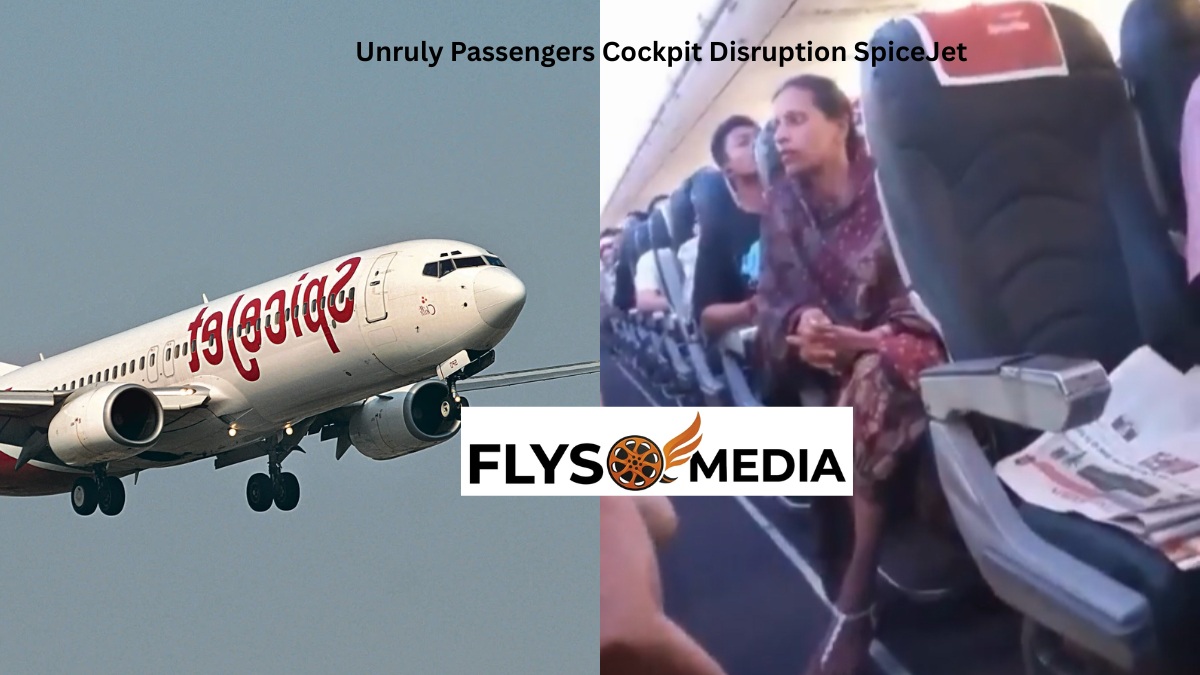
The incident involving unruly passengers cockpit disruption spicejet quickly became a major aviation safety story, not just in India but across global media. What looked like a simple onboard complaint turned into a serious cockpit security concern. This article breaks down what actually happened, why it matters, and what it reveals about aviation safety, passenger behavior, and airline response systems.
- What happened in the unruly passengers cockpit disruption spicejet incident?
- Why did passengers try to enter the cockpit?
- How did the airline and security respond to the cockpit disruption?
- What makes cockpit security so critical in aviation?
- What are the legal consequences for unruly passengers in such cases?
- Are unruly passenger incidents increasing globally?
- How do airlines handle disruptive passengers mid-flight?
- Could this cockpit disruption have been prevented?
- How do passenger psychology and stress contribute to such incidents?
- What lessons does the unruly passengers cockpit disruption spicejet case teach?
- Quick timeline of the cockpit disruption incident
- Key takeaways
- Conclusion
What happened in the unruly passengers cockpit disruption spicejet incident?
The disruption occurred on a SpiceJet flight traveling from Delhi to Mumbai. During taxiing, two passengers attempted to forcefully approach the cockpit.
They ignored repeated instructions from the cabin crew and even the captain. This escalated the situation from a routine complaint to a full aviation security threat.
Key details include:
- Flight: SG 9282
- Stage: Taxiing before takeoff
- Issue: Attempt to access cockpit
- Crew response: Repeated warnings
- Outcome: Aircraft returned to bay
This type of mid-taxiing disruption is rare but treated as high-risk under aviation safety protocols.
Why did passengers try to enter the cockpit?
The root cause appears simple but dangerous in outcome. Reports suggest the passengers were upset about the aircraft’s air conditioning not working properly.
This created discomfort, frustration, and eventually confrontation.
Here’s how the situation escalated:

- Cabin discomfort due to heat
- Verbal complaints ignored or delayed
- Emotional escalation
- Attempt to confront pilots directly
This pattern is not uncommon. In stressful environments like aircraft cabins, even minor issues can escalate quickly.
In similar U.S. cases, passengers have become aggressive over delays or seating disputes. The difference here was the attempt to approach the cockpit, which crosses a critical safety line.
How did the airline and security respond to the cockpit disruption?
The crew followed standard aviation safety procedures.
Instead of continuing the flight, the captain made a safety-first decision. The aircraft was returned to the bay.
Passengers involved were:
- Offloaded from the aircraft
- Handed over to Central Industrial Security Force
- Investigated for misconduct
This response aligns with global best practices. In the U.S., the FAA enforces a zero-tolerance policy for disruptive passenger behavior.
What makes cockpit security so critical in aviation?
Cockpit security is one of the most sensitive aspects of flight safety.
After incidents like the September 11 attacks, aviation rules changed worldwide.
Modern aircraft are designed with:
- Reinforced cockpit doors
- Restricted access protocols
- Crew communication systems
- Emergency lockdown procedures
If a cockpit breach succeeds, the consequences can be severe. Pilots could be distracted or overpowered. This risks the safety of everyone onboard.
That’s why even an attempt is treated as a serious offense.
What are the legal consequences for unruly passengers in such cases?
In India, aviation is regulated by the Directorate General of Civil Aviation.
Passengers involved in such incidents can face:
- Immediate removal from the flight
- Criminal charges
- Placement on a no-fly list
- Financial penalties
Penalties for Disruptive Behavior
Disruptive passenger behavior is handled in escalating levels depending on severity. Verbal abuse usually results in a warning and may lead to a temporary travel restriction. Physical aggression is treated more seriously, often leading to immediate offloading from the aircraft along with fines and possible criminal charges.
The most severe cases, such as attempts to access the cockpit, involve handing the passenger over to security authorities and can result in airline bans and legal action.
In the United States, interfering with crew duties can lead to penalties reaching tens of thousands of dollars, reflecting the strict enforcement of aviation safety rules.
In the U.S., passengers who interfere with crew duties can face fines up to tens of thousands of dollars.
Are unruly passenger incidents increasing globally?
Yes, and this is a growing concern.
According to global aviation trends:
- Post-pandemic travel stress has increased incidents
- More passengers show aggressive behavior
- Airlines report higher crew interference cases
In the United States, the Federal Aviation Administration has recorded thousands of unruly passenger reports in recent years.
Common triggers include:
- Flight delays
- Alcohol consumption
- Seat disputes
- Cabin discomfort
The SpiceJet incident fits into this global pattern.
How do airlines handle disruptive passengers mid-flight?
Airlines train crew extensively for such situations.
Cabin crew follow a step-by-step escalation process:
1. Verbal Warning
Passengers are asked to comply calmly.
2. Written Warning
Formal notice is issued.
3. Restraint Measures
In extreme cases, passengers may be physically restrained.
4. Diversion or Return
Aircraft may return or divert to nearest airport.
This structured response ensures safety without overreacting.
Could this cockpit disruption have been prevented?
Yes, and this is where the biggest content gap exists.
From a real-world perspective, many such incidents start small.
Preventive measures include:
- Faster response to passenger complaints
- Clear communication from crew
- Better cabin temperature control
- Early conflict de-escalation
From experience, passengers often react more to silence than to problems. A simple explanation can prevent escalation.
How do passenger psychology and stress contribute to such incidents?
Air travel is a high-stress environment.
Passengers experience:
- Heat and discomfort
- Delays and uncertainty
- Claustrophobic space
- Lack of control
These factors can trigger emotional reactions.
In this case, the AC issue likely acted as a trigger. But the escalation reflects deeper behavioral patterns.
Understanding this helps airlines improve customer handling.
What lessons does the unruly passengers cockpit disruption spicejet case teach?
This incident highlights several important lessons:
- Safety always comes before schedule
- Cockpit access is a red line
- Small issues can escalate quickly
- Crew training is critical
- Passenger awareness is equally important
It also shows the importance of strict enforcement.
Without strong rules, such behavior could become more common.
Quick timeline of the cockpit disruption incident
- Boarding completed
- Aircraft began taxiing
- Passengers raised AC complaint
- Situation escalated
- Attempt to approach cockpit
- Crew intervened
- Aircraft returned to bay
- Passengers removed
- Flight delayed significantly
Key takeaways
- The unruly passengers cockpit disruption spicejet incident is a serious aviation safety case
- Cockpit security is non-negotiable in modern aviation
- Passenger behavior can quickly escalate under stress
- Airlines follow strict protocols to handle disruptions
- Legal consequences for such actions are severe
- Prevention depends on communication and early action
Conclusion
The unruly passengers cockpit disruption spicejet case is more than just a viral news story. It reflects a growing global issue in aviation. Passenger behavior, airline response, and safety systems all intersect in moments like this.
While the situation started with a basic complaint, it escalated into a security threat. This shows how fragile the balance inside an aircraft can be.
For airlines, the focus must remain on prevention and training. For passengers, awareness and responsibility are equally important.
In the end, aviation safety depends on both sides working together.